Bucknell University Athletics
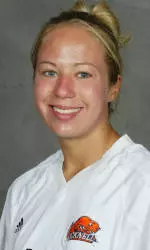
Goal Driven - Despite the Challenges Mrozek Dedicated to Pursuing Career in Medicine
9/4/2006 8:00:00 AM | Women's Soccer
Sept. 4, 2006
By Jillian Jakuba, Bucknell Athletic Communications
For most student-athletes, balancing between athletics and academics can be difficult, and often that task becomes even harder for those whose majors include lab requirements. On top of both those challenges, senior Jennifer Mrozek has undertaken the added daunting task of preparing for the Medical College Admission Test (MCAT), a necessary step towards her goal of entering medical school and becoming a doctor.
"I always knew I wanted to be a biology major," says Mrozek, who enters her fourth season as a member of the Bucknell women's soccer team this fall. "I thought I wanted to be a doctor, but I wasn't sure right away because I was a little intimidated by Bucknell Athletics' reputation of academic success, so I was uncertain of how I would succeed academically here. My freshman year was hard as I learned how to study and balance that with soccer. Once I realized I could do it, I became confident that I could keep pace with the other biology majors, even though I was an athlete. Then I knew I could be a doctor. If I can handle this, I know I can handle medical school."
Mrozek, without a doubt, has excelled in both forums over her three years at Bucknell. On the field, she has started all but one of 55 games in her collegiate career and has played in every contest since first joining the Bison squad. As a sophomore in 2004, she was one of just four players to start every game and was part of a defense that posted five shutouts. Most recently, in Bucknell's 2006 season-opening weekend at the Owl Eyes classic, the defender scored her first collegiate goal while helping the Orange and Blue post a 7-0 shutout against Central Arkansas. Off the field, she has been a member of the Patriot League Academic Honor Roll all three of her seasons and is a Dean's List student.
Over this past spring and summer, Mrozek has taken the MCATs twice and, while many students spend their summer break relaxing, she was hard at work.
"I did biology research here for the summer, so I was at Bucknell, which was kind of nice because it's a little quieter and easier and you're not so distracted by everything," Mrozek explains. "I would go to work, go to the gym and get my lift in and then go home and study. I had a very routine schedule, and at times it was lonely but you have to do what you have to do."
Now that she has taken the MCATs, as her second testing date fell amidst a grueling soccer preseason schedule, Mrozek prepares for the next step in the highly competitive medical school application process. She has applied to 15 schools, the recommended number for a prospective medical student since the acceptance rate at each institution is between one and two percent, and is now beginning to get secondary applications back. After secondary applications, schools request interviews with candidates and from there, offer admittance.
Entering this next step presents an entire new set of challenges. With the 2006 women's soccer season in full swing, at any moment Mrozek may receive an interview request from any of her prospective schools, something that could present a conflict with Bucknell's game schedule.
"Schools aren't very lenient with changing times and dates for interviews, so a conflict between an interview and one of our games is what I'm most worried about," admits Mrozek. "That's an issue I really don't want to face until it happens, if it happens at all."
This lack of flexibility is new to Mrozek, who hasn't been confronted with choosing between soccer and academics while at Bucknell, thanks to good communication and cooperation between her coaches and professors.
"Coach is very understanding. If you have lab, you wait until lab is over and then go out to practice," states Mrozek. "You never miss class for practice, but for games the situation is slightly different. If we have to leave to travel for a game and I miss lab, I talk to my professor and make other arrangements. All of them have been great with letting me make up the lab on a different day."
With however stressful this fall gets for Mrozek, dealing with tough choices and waiting to hear from medical school, on top of taking classes, she knows soccer will help her make it through.
"When I'm playing soccer, its my release, my chance to get away from the pressures of school and the pressures of getting into medical school," she comments.
Shortly after the season is over, Mrozek will graduate in December, having completed all of her graduation requirements ahead of schedule. Even though her playing career will be behind her, Mrozek believes her experience playing collegiate soccer will help her immensely once she enters medical school and beyond in her career as a doctor.
"I think I have learned invaluable time management skills while playing soccer at Bucknell," Mrozek remarks. "I've also learned how to work as a part of a team and how to handle stress. It's stressful at times when you have a big exam and you have to go to practice or you have a big exam and a big game on the same day. Being able to separate the two and not freak out so much that you can't do well on either is the key. Medical school will probably be the most difficult thing I've done up to this point in my life, and I think balancing soccer with academics has given me a good foundation for that."